How to Write a Melody for Your Chord Progression
A chord progression without a melody is a bed. Add a melody and you have a song. Most songwriters hear the melody first, or find it by humming over chords. But when the humming is not landing, it helps to understand how melodies relate to harmony so you can push past the block deliberately.
Start with the chord tones
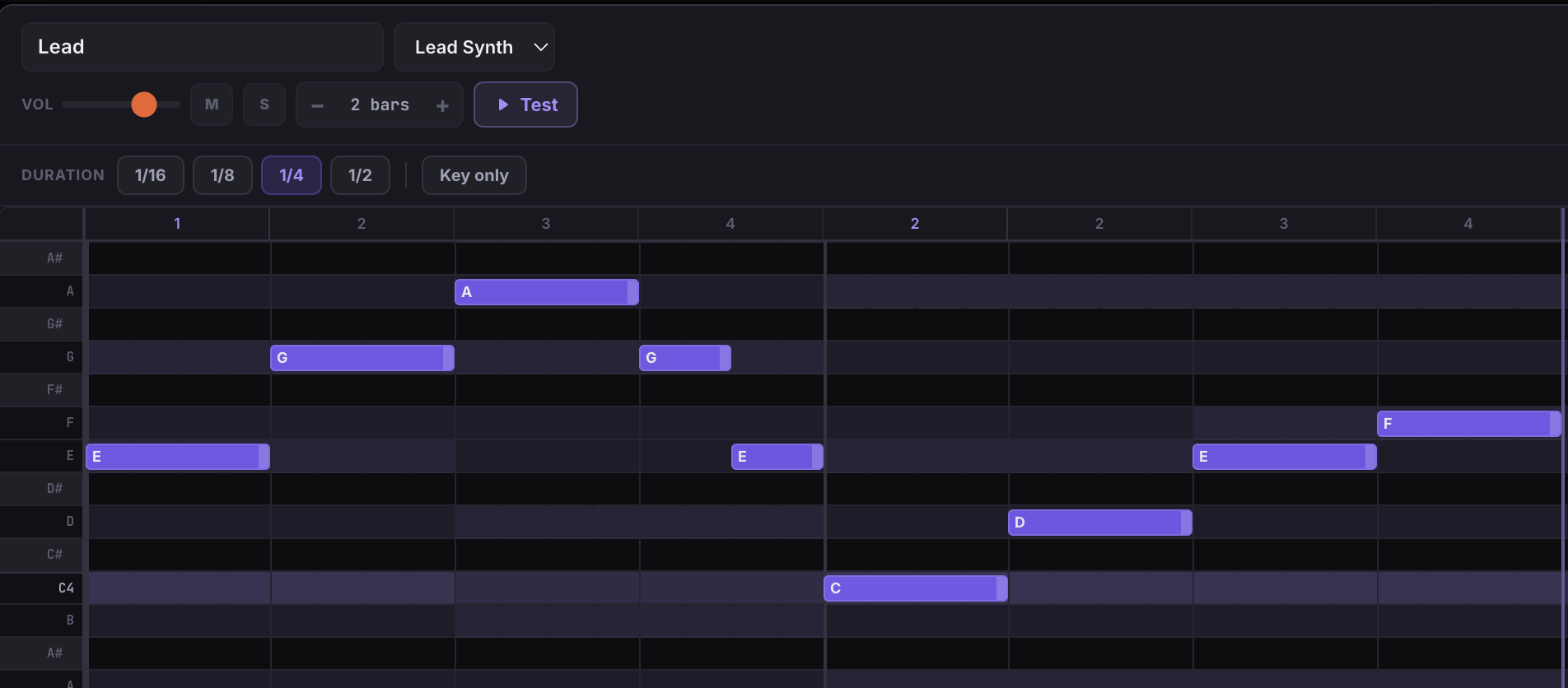
Every chord contains three or four notes. These are called chord tones, and they are the safest landing spots for your melody. When your vocal lands on a chord tone at the start or end of a phrase, the note sounds grounded and resolved.
For a C major chord, the chord tones are C, E, and G. For an Am chord, they are A, C, and E. If your melody lands on one of those notes when that chord is playing, it will always sound like it belongs.
Use chord tones to anchor the strong beats of your melody, especially beat 1 of each bar and the final note of each phrase. Everything in between can move more freely.
Move by step, leap for impact
Melodies that move mostly by step — one scale note at a time — feel natural and singable. A line that jumps constantly is hard to remember and harder to perform.
A useful default: move by step for the body of the phrase, and save leaps for moments of emotional emphasis. A leap up creates a sense of reach or longing. A leap down creates a sense of release or resignation. Use them deliberately.
When you do leap, try to resolve the leap by stepping back in the opposite direction. If you jump up a fifth, the next note often steps back down. That resolution is what makes the leap feel satisfying rather than unfinished.
Match the rhythm to the lyric stress
Melody and lyric are inseparable in a song. The melody's rhythm should fall on the natural stress of the words. "Streetlight" is STREET-light, so the first syllable lands on the stronger beat. If you write a melody where "light" lands on the downbeat, the word will feel awkward every time you sing it.
Before you notate anything, speak the lyric out loud with natural emphasis. Then find a melodic rhythm that matches that pattern. This is faster than writing a melody first and forcing words onto it later.
Give each section a different range
Verse and chorus melodies should feel different, and one of the simplest ways to create that difference is range. Keep the verse melody lower and tighter, then let the chorus reach higher. The moment the melody climbs, the chorus opens up emotionally.
A verse that sits in the lower half of your range, with a chorus that pushes into the upper half, gives the song a natural energy arc without changing anything about the chords.
Repeat and vary
The most memorable melodies use repetition with variation. You might sing the same four-note motif three times, but change the last note each time. The listener learns the shape on the first pass and anticipates the variation.
The classic structure is AAB: phrase A, phrase A again (with slight variation), then phrase B which closes the thought. Two bars of something familiar, then two bars that resolve it. That is the skeleton of thousands of pop, folk, and soul melodies.
Sketch it note by note
If you are not a keyboard player, writing a melody in a note editor is often more useful than trying to sing it out of nothing. Place a note, hear how it sounds against the chord, move it up or down, add the next one. Working note by note forces you to commit to specific pitches rather than staying vague, and you will hear immediately when a choice is wrong.
Lock every note to your key so the scale is always right, and let the chord progression tell you which chord tones are available at each moment. Build the shape of the phrase before you worry about the exact rhythm.
Once you have a melody sketched, add lyrics beneath it and hear both together. The Lyric Lab → Try it lets you pin words to chord changes so you can see where the phrases land and adjust the timing as you go.